
Brinson Early Career Fellowships are awarded to scientists who are leading important areas of inquiry and defining new frontiers with their research.
Rapid advances in technology are propelling the fields of astronomy, astrophysics, and cosmology forward at unprecedented rates, leading to a deeper understanding of some of the greatest cosmic mysteries.
The Brinson Foundation began awarding Brinson Postdoctoral Fellowship grants to top U.S. research institutions in 2020, to support postdoctoral scholars working at the forefront of these fields.
The first Fellowship positions began in fall 2021. Topics have included star and galaxy formation, dark matter detection, and multi-messenger solar astronomy. While the broader research areas are specified by the Foundation, the Foundation does not participate in the selection of these Fellows. Some Fellows have joint appointments between institutions.
The Foundation does not accept external inquiries regarding these awards.
Current Early Career Fellowships
Brinson Fellows – 2025

Cuncheng (Mandy) Chen
Ph.D., Astronomy and Astrophysics, University of Chicago
Mandy Chen’s research focuses on robustly characterizing the dynamics of the circumgalactic medium—the outermost, gaseous envelope of galaxies. This expansive gas reservoir dominates the baryonic mass of a galaxy, and records critical information about a galaxy’s past and ongoing interactions with the surrounding environment. As a Ph.D. student at the University of Chicago, Chen leveraged the recent advent of high-throughput integral field spectrographs and built the first spatially-resolved constraints on galactic outflows and CGM turbulence in distant galaxies. Using several different strong emission lines as tracers, she initiated and led investigations of gaseous halos surrounding galaxies with and without strong black hole accretion. As a Carnegie-Caltech Brinson Postdoctoral Fellow in Observational Cosmology, Chen harnesses data from ground-based integral field spectrographs on both Keck and Magellan combined with the burgeoning wealth of archival data from JWST/NIRSpec IFU to decode the complexities of turbulent motions in the circumgalactic medium across a wide range of physical scales and cosmic epochs.

Junwen (Robin) Xiong
Ph.D., Physics, University of California, Berkeley
As a Brinson Postdoctoral Fellow in Experimental Quantum Cosmology, Junwen Xiong works on the development of next-generation dark matter detectors using superconducting quantum sensors to collect and measure the crystal acoustic vibrations (“phonons”) created by a particle interaction. These detectors will enable the search for much lighter dark matter, potentially helping to identify the dark matter and solving this major mystery of the universe.
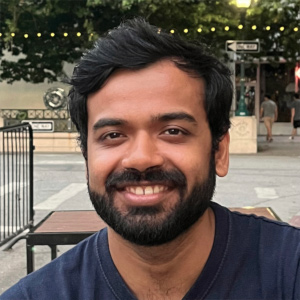
Sunil Simha
Ph.D., Astronomy and Astrophysics, University of California, Santa Cruz
Sunil Simha’s research uses Fast Radio Bursts (FRBs) as probes of matter in the universe. FRBs are flashes of radio light that frequently occur all over the sky daily. Using sensitive radio telescopes, astronomers can detect and pinpoint their locations to distant galaxies from which they originate. Due to their unique millisecond-duration flash, they offer an exciting new window to matter in the universe. Most of the matter, a.k.a. baryons, in the universe is present in a highly diffuse and ionized state, a plasma, which makes them difficult to detect. However, FRBs are dispersed when propagating through this plasma, much like sunlight is dispersed by raindrops to make a rainbow. Measuring this dispersion accurately tells us exactly how much matter the FRB has traveled through, thus directly detecting them. As a NU-UChicago Brinson Postdoctoral Fellow in Astrophysics, Simha’s research combines the information obtained through FRBs with 3D optical maps of the foreground universe to place novel constraints on plasma distribution around and between galaxies. This technique complements other probes of matter in the universe to give us a much more complete picture of the cycle of baryons between galaxies and their environments.

Brianna Zawadzki
Ph.D., Astronomy and Astrophysics, Pennsylvania State University
Brianna Zawadzki uses radio interferometers to study the planet-forming environments around stars other than the Sun. She completed her Ph.D. in Astronomy & Astrophysics at Pennsylvania State University in 2023, where she used simulations, observations, and machine learning techniques to better characterize disks of gas and dust in the early stages of planet formation. As a Brinson Postdoctoral Fellow at Wesleyan University, Zawadzki analyzes new observations of debris disks from the Atacama Large Millimeter/submillimeter Array (ALMA) to search for signs of planets and probe the diverse morphologies of these disks. She also continues to develop novel, machine learning based imaging techniques to aid in the acquisition of ultra high resolution interferometric images. This work will help astronomers understand how planets form in greater detail than ever, complementing the thousands of recent exoplanet detections from missions like Kepler and TESS. In addition to her research, Zawadzki enjoys communicating science to the general public through a wide range of outreach events; she spent several years serving as a local organizer of Astronomy on Tap, an organization which brings public astronomy talks to restaurants and breweries, and frequently contributes to a variety of other science events sponsored by universities and public libraries.
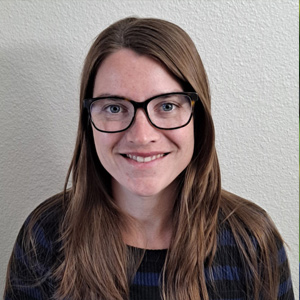
Maren Cosens
Ph.D., Physics, University of California, San Diego
Maren Cosens’ work in the Physics Department at the University of California, San Diego has been two-fold, with aspects of both observational astrophysics and the development of new instrumentation. Her observational research has been focused on using some of the largest ground-based telescopes in the world to study the properties of star-forming regions and the interplay between those regions and the galaxies in which they form. Namely, the factors that influence the way in which these regions develop, and the impact of the energy imparted to the galaxy through processes known as “feedback.” In addition to her observational research, she has also worked extensively on the development of new instruments, primarily working on the mechanical design for a next generation imager and an integral field spectrograph, Liger, for the W.M. Keck Observatory which will provide improvements in resolution and field-of-view, over existing instruments. During the term of her Brinson Postdoctoral Fellowship in Astronomical Instrumentation at the Carnegie Observatories, she continues to focus on both these areas of research, working on the development of the Magellan Infrared Multi-Object Spectrograph (MIRMOS), as well as utilizing the vast observational resources at Carnegie to expand her studies of star-forming regions to a broader range of environments.
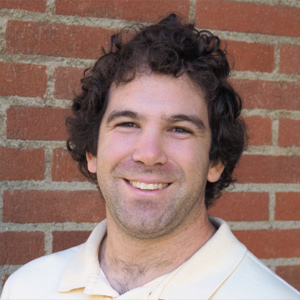
Matthew Hosek
Ph.D., Astronomy, Institute for Astronomy, University of Hawai’i at Manoa
Matt Hosek is currently an astronomy postdoc with the Galactic Center Group at UCLA. He completed his Ph.D. in 2018 at the Institute for Astronomy at the University of Hawai’i at Manoa under the direction of Professor Jessica Lu. His research focuses on the formation and dynamics of stars near the center of our Galaxy. As a Brinson Postdoctoral Fellow, Hosek uses data from the Hubble and James Webb Space Telescopes to develop a new reference frame to measure the orbits of stars near the Galactic Center with improved precision and accuracy. This will enable tests of General Relativity and probe the distribution of matter near the central supermassive black hole. He is also measuring the masses of stars in two young star clusters in the region in order to evaluate how the extreme environment near the Galactic Center impacts the physics of star formation.
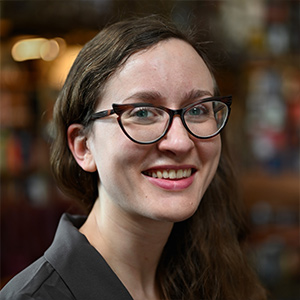
Stella Ocker
Ph.D., Astronomy, Cornell University
Stella Ocker studies the diffuse gas between stars and galaxies, the interstellar and intergalactic media that fuel galaxy and star formation. She works to map the distribution of cosmic gas extending all the way from the solar neighborhood to distant galaxies. As a Ph.D. student at Cornell University, Ocker was a Guest Investigator on the Voyager Interstellar Mission, where she discovered a new plasma wave signature that has enabled high-resolution density mapping of the very local interstellar medium. She has also used distant radio sources, including neutron stars and fast radio bursts, to probe cosmic gas in a wide range of astrophysical environments. As a Carnegie-Caltech Brinson Postdoctoral Fellow in Observational Cosmology, Ocker synthesizes state-of-the-art optical and radio surveys, including the Sloan Digital Sky Survey V and the Deep Synoptic Array, to build a distance ladder for using fast radio bursts as probes of the universe’s large-scale structure. Ocker also continues to be a member of the North American Nanohertz Observatory for Gravitational Waves, which uses pulsar timing to search for gravitational waves from supermassive black holes.
Previous Early Career Fellows
Brinson Fellows – 2024
Amin Aminaei
Ph.D., Communication Systems, Lancaster University, UK
Juliana Cherston
Ph.D., Aerospace Sensor Systems, MIT Media Lab
Ryan French
Ph.D., Solar Physics, UCL Mullard Space Science Laboratory
Anirudh (Ani) Chiti
Ph.D., Physics, Massachusetts Institute of Technology
Yuya Kusuki
Ph.D., Physics, Yukawa Institute for Theoretical Physics, Kyoto University